Buying land in Nigeria while living abroad used to mean flying home, navigating family pressure, chasing lawyers, and hoping nothing went wrong while you were on the plane back. It doesn't have to work that way anymore — but only if you know what you're doing.
A growing number of Nigerians in the UK, US, Canada, and Europe are actively investing in property back home. Some are building retirement plans. Some are diversifying away from foreign currency risk. Some just want something tangible — something that belongs to them, on Nigerian soil, that they can eventually build on or pass on.
The demand is real. The challenge has always been trust. This guide covers what a responsible diaspora land purchase actually looks like, step by step.
Step 1: Start With the Title, Not the Price
The first question to ask about any property in Nigeria is not how much it costs. It's what type of title backs it.
Nigerian land titles exist on a spectrum. At the top is the Certificate of Occupancy — the C of O — issued by the state government. It is the strongest form of title, legally recognised nationwide, and the gold standard any serious investor should insist on. Below it sits the Governor's Consent, which applies when a C of O land is being transferred from one owner to another. Then there are various less formal arrangements — deed of assignment, letter of allocation, family land — each carrying progressively higher risk.
When a developer cannot show you a C of O for the estate (not just a personal one for a single plot, but one covering the entire development), that is a red flag worth taking seriously. Legitimate developers will provide documentation willingly. Those who become evasive or pivot to talking about the price when you ask about the title are worth avoiding entirely.
Step 2: Verify the Developer Independently
There are real estate developers in Nigeria who have delivered estates, allocated plots correctly, and maintained relationships with investors over years. There are also people who take deposits on land they don't own and disappear. The gap between these two types is not always obvious from a flyer or a website.
Before you pay anything, verify the developer independently. Ask for:
- The Corporate Affairs Commission (CAC) registration number — any legitimate company will have one
- Evidence of previous completed estates — allocation letters, photos, testimonials from verifiable buyers
- A physical office address you can confirm exists via a search or a trusted contact
- The title documents for the land in question — not photocopies, the originals or notarised copies
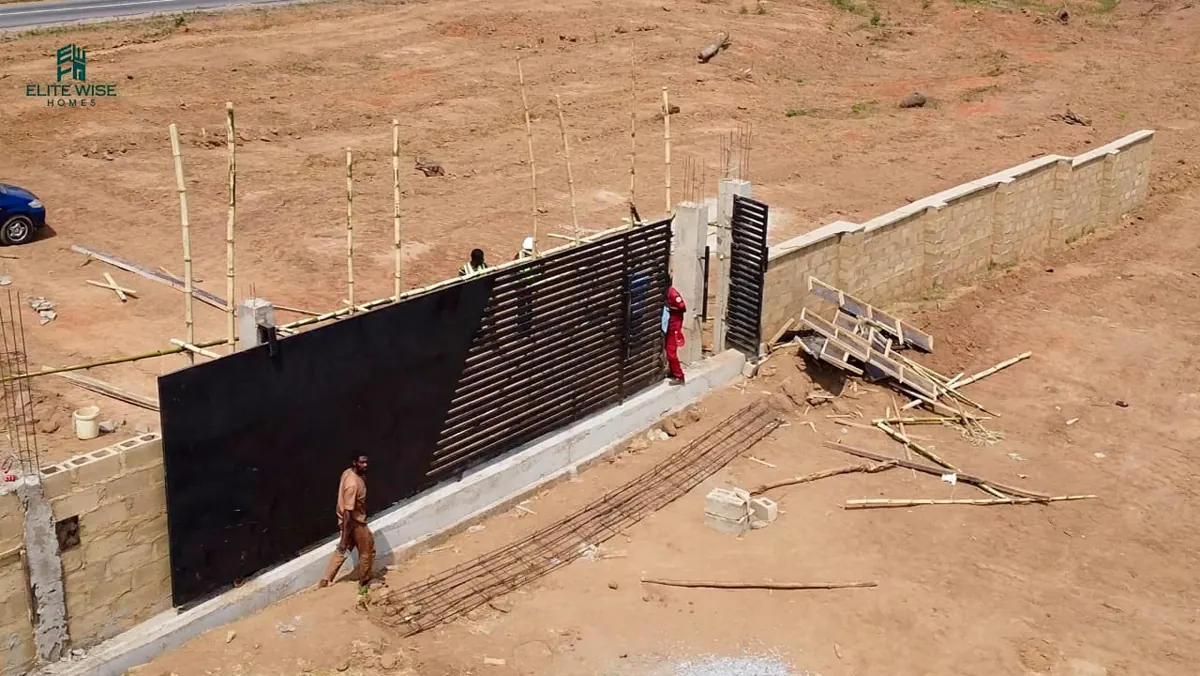
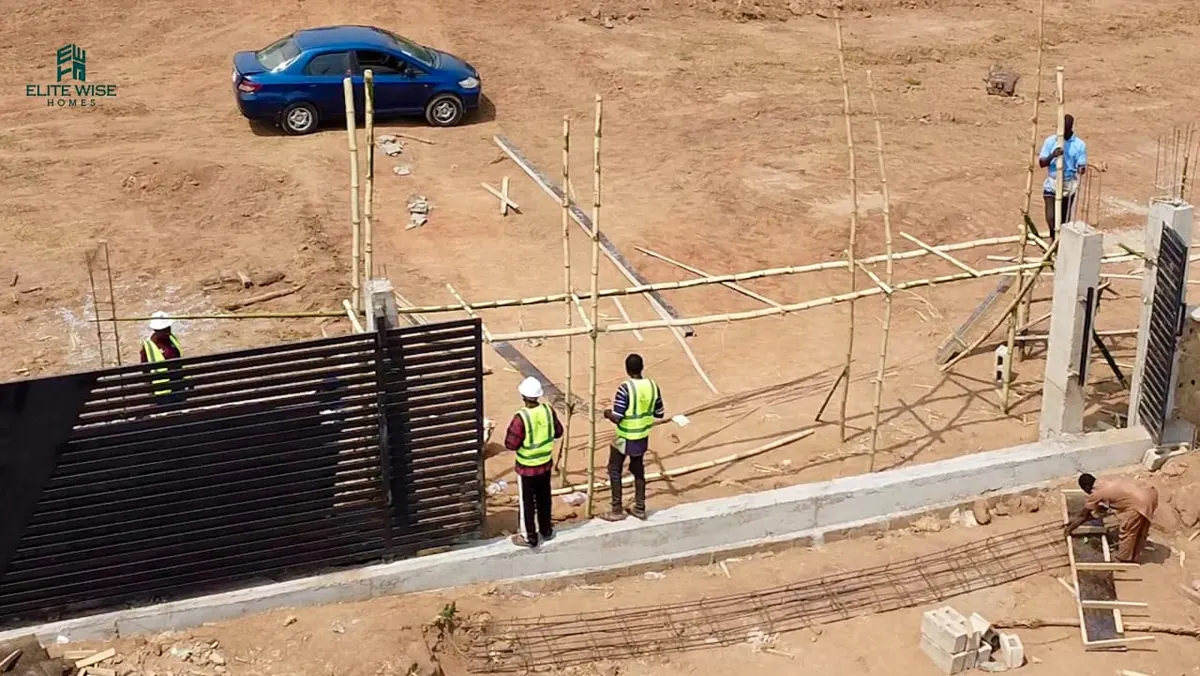
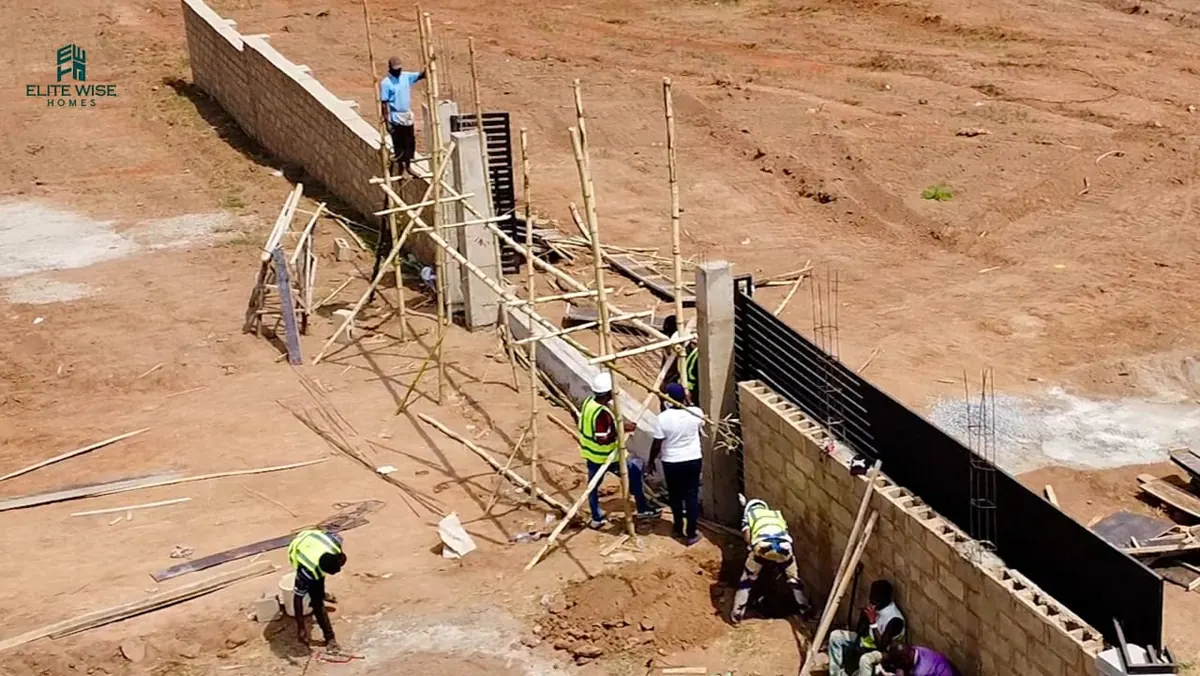
If you have family or a trusted friend in the city where the estate is located, ask them to physically visit. A site that exists, where construction is visibly in progress, with a gate, perimeter markings, and workers on site, is a very different proposition from a plot on a brochure.
Step 3: Understand the Purchase Process Before You Commit
A legitimate remote land purchase follows a clear sequence. You should be able to see this sequence written out by the developer before you make any payment.
The typical process looks like this: you express interest and select a plot type, you fill in a subscription or reservation form with your details, the developer issues you a provisional allocation or a proforma invoice, you make your initial deposit to a confirmed company account, the developer issues an allocation letter confirming your specific plot, and full documentation — survey plan, deed of assignment, receipt — follows once the balance is paid.
The key thing to watch: your payment should go to a company bank account, not a personal one. If a developer asks you to pay into an individual's personal account, decline. This is one of the most common red flags in Nigerian real estate fraud.
Step 4: Know What Documents You Should Receive
Once you've made your payment, you should receive documentation at each stage. Don't accept verbal assurances. The paperwork is the proof.
At the point of deposit, you should receive an official receipt from the company and a written allocation letter confirming your plot number, size, estate name, and the price agreed. This document is your proof of purchase and should be on company letterhead with a signature.
After full payment, the company should provide a survey plan — a technical document produced by a licensed surveyor that shows your plot's exact coordinates and dimensions — and a deed of assignment, which formally transfers the right to that plot from the developer to you. For C of O estates, the deed of assignment gives you the right to apply for your own C of O over your specific plot once the estate is fully allocated.
Keep all of these. Store digital copies in at least two places. These documents are what protect your investment.
Step 5: Manage the Currency and Payment Logistics
If you're buying from the UK, US, or Canada, you'll be converting foreign currency to naira. A few things worth knowing here.
Nigerian real estate is almost always priced in naira, which means your purchase cost in foreign currency fluctuates with the exchange rate. If the naira weakens against the pound or dollar before you've completed your payments, your remaining balance costs you less in your base currency — but land prices can also rise to compensate, so it balances out over time.
International bank transfers to Nigerian accounts are standard and legal. Most Nigerian banks accept foreign transfers, and many diaspora investors use services like Wise, Remitly, or direct SWIFT transfer to convert and send funds. Confirm the exact account details directly with the company before sending anything, and send a small test amount first if you're unfamiliar with the process.
How Elitewise Homes Handles Remote Purchases
Elitewise Homes was built with the remote investor in mind. The subscription form is online. You fill it in, your details are received immediately, and a member of the team contacts you within 24 hours to confirm your plot and provide the payment account details. Once your deposit lands, your allocation letter is issued. The rest of the documentation follows as payments complete.
Every estate Elitewise Homes has launched — Victoria Brooks in Ibeju-Lekki, Victoria Lagoon in Epe, and Ire Garden City in Epe — has sold out completely. The investors who bought in those estates did so, many of them, without setting foot on the land first. The documentation was clear, the process worked, and the land was real.
Adésewà Estate in Moniya, Ibadan, is the current active estate. C of O title. Government-approved layout. Perimeter wall under construction. Plots from ₦4 million at current pricing, which holds until March 31, 2026.
If you want to talk through the process before committing anything, the WhatsApp line is open: +234 803 922 3488. No pressure, no hard sell. Just answers.
Ready to Start the Process?
Fill in the Adésewà Estate subscription form online — takes under 5 minutes. Our team confirms your plot and payment details within 24 hours. Everything is done remotely.