Most people think about Ibadan the way they thought about Lekki in 2005 — as a secondary option. A place you consider when Lagos prices get out of hand. That framing is about fifteen years out of date, and if you're still holding it, it's costing you money.
Ibadan is Nigeria's largest city by land area. It has a population of roughly 3.5 million people and growing, with significant urban expansion happening along several corridors simultaneously. The road from Ibadan to Lagos is one of the busiest commercial routes in West Africa. The city has its own airport, two major federal universities, a teaching hospital, and a manufacturing base that Lagos companies have been quietly expanding into for years because land and labour are cheaper.
Within Ibadan, the Moniya axis — running along the Iseyin Road — is where a lot of that growth is currently landing. Here's why.
What's Actually Happening in Moniya
Moniya is a town in Akinyele Local Government Area, sitting at the northern edge of Ibadan's urban boundary. A decade ago, it was largely agricultural land with a few residential pockets. That is changing quickly, driven by three things happening at the same time.
First, Ibadan's urban population is expanding northward and westward. The city centre — Dugbe, Agodi, Bodija — is already saturated. As professionals, civil servants, and returning diaspora look for land to build on, they're moving outward along the major roads. Iseyin Road is one of those arteries.
Second, the Ibadan-Kaduna standard gauge rail line — part of the Federal Government's national rail modernisation programme — has a station planned for the Moniya area. Infrastructure like this doesn't just improve transport. It anchors land values. Property within a few kilometres of a rail terminus consistently appreciates faster than surrounding areas, because the station becomes a commercial and residential magnet.
Third, the Old Ife Road and Iseyin Road corridors are seeing active road improvement. When access improves, demand follows. Landowners who bought before the road work are already sitting on assets that are worth more than what they paid.
The Case for Buying Early
Land appreciation in growth corridors follows a pattern that's fairly predictable once you know what to look for. There are usually three stages.
In the first stage, the area is "off the radar." Infrastructure is either planned or just beginning. Land prices reflect the current state, not the coming one. This is where the best returns are made — but it requires either good information or a trusted developer who knows the terrain.
In the second stage, infrastructure arrives or gets close enough that people can see it clearly. This is when media attention picks up, when developers start advertising heavily, and when prices jump. Buyers at this stage still do well, but they're paying for what early buyers got for less.
In the third stage, the area is established. Prices are high, land is scarce, and the easy returns are behind you. This is when people look back and say "I should have bought there five years ago."
Moniya is in the transition between stage one and stage two. The infrastructure signals are clear. The rail corridor is in progress. The road improvements are happening. Commercial activity is picking up along Iseyin Road. Land prices have moved but haven't made the full jump that comes when an area tips into mainstream awareness.
You're not late. But you're not early either. You're in the window.
What Adésewà Estate Offers Specifically
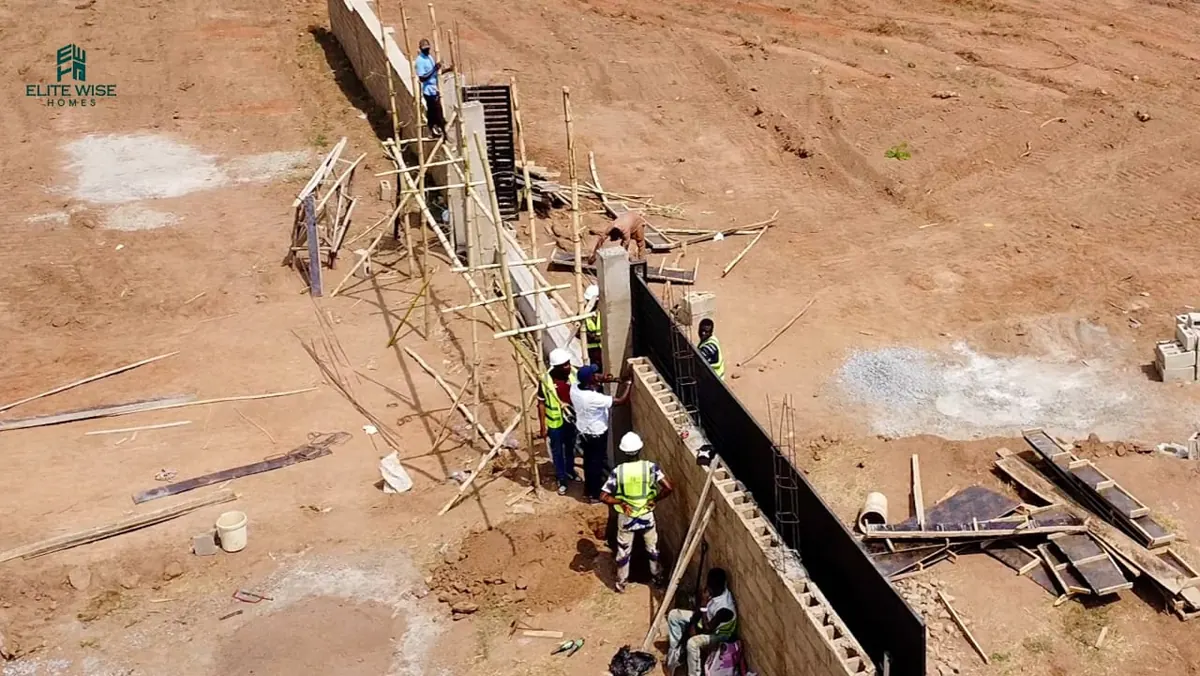
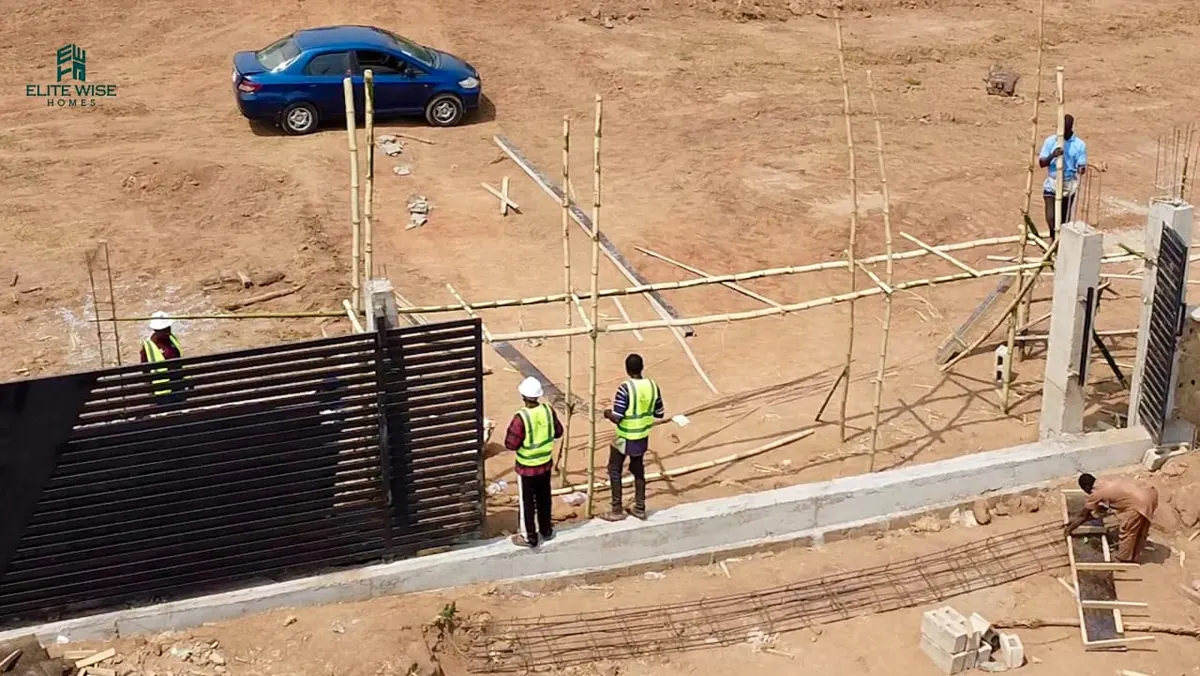
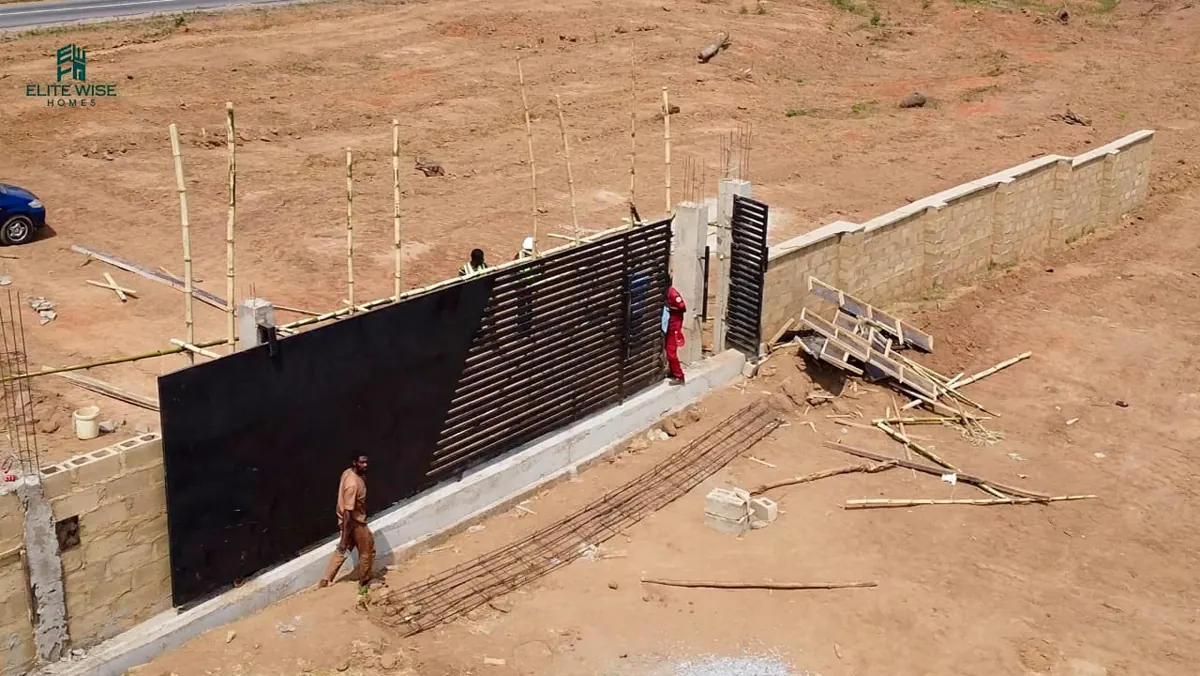
Elitewise Homes' Adésewà Estate sits at Olowa Community, Moniya. The estate is government-surveyed with a Certificate of Occupancy — the strongest land title available in Nigeria. The layout is approved, perimeter walls are under active construction, and road access is defined in the site plan.
Plot sizes run from 500sqm residential to 1,000sqm commercial to full-acre (3,000sqm) holdings. Current pricing starts at ₦4 million for a residential plot, with an initial deposit of ₦500,000 and balance spread interest-free over six months.
Those prices hold until March 31, 2026. From April 1, they go up. That's not marketing pressure — it's just the economics of a development that's actively progressing. The cost of building rises, the value of surrounding land rises, and the price adjusts accordingly.
One Thing Worth Being Honest About
Land investment in growth corridors is not a get-rich-quick trade. Infrastructure timelines in Nigeria move at their own pace. The Moniya rail station will come, but when exactly, nobody can say with certainty. Land here is a medium to long-term hold — three years at minimum, five to seven to capture the full appreciation cycle.
If you need your money back in twelve months, land isn't the right vehicle. But if you're building generational wealth, adding an asset to your portfolio that you don't have to actively manage, or securing a plot to eventually build on — this is a well-positioned location at a price that still makes sense.
The investors who made serious money in Lekki didn't buy there when it was already famous. They bought when it was still "that road past VGC." Moniya is having that conversation now.
Adésewà Estate — Plots Available Now
Residential from ₦4M · Commercial from ₦9M · Acre from ₦23.5M. Current pricing holds until March 31, 2026.